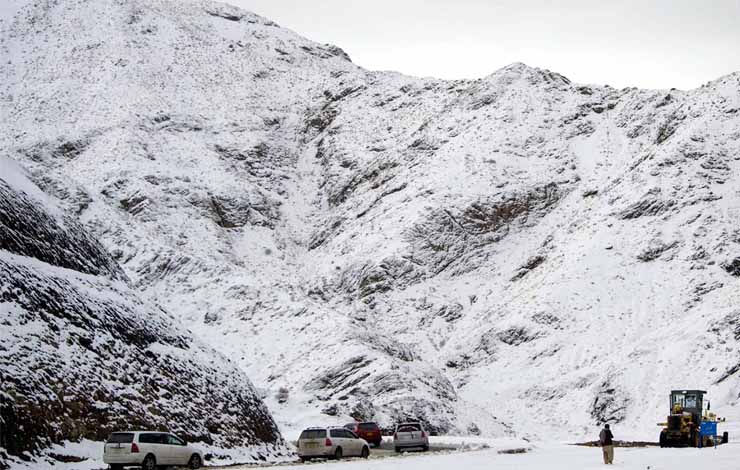
Quetta Mountains
Quetta is surrounded by mountains, which form a natural ‘fort’ – the name of the city itself originates from Kwatta, meaning fort in Pashto. To the north lies Zarghoon Mountain, Murdar in the East, Chiltan in the South and Takatu in the West. The urban centre is multi-ethnic and multi-linguistic. For centuries, Quetta housed people of all ethnicities, religions and sects with an open heart.
Despite the unrest and bloodshed, people try to find happiness where they can. Recently, Basant was celebrated – proof of citizens’ courage in efforts to bury sorrows and hatred. From grandson to grandfather, everyone participated in the kite-flying. Shutter down strikes continue, yet people come out and go to picnic spots on the eve of such strikes.
A nomad family migrating for the season in the suburbs of Quetta. — Online Photo Ordinary citizens of Quetta are aware of the contradictions they live with. “Security forces’ check posts have surrounded picnic points everywhere,” says Dr. Irfan Tareen, who has been practicing medicine for the last 25 years. He adds that the closure of several roads for security reasons means it’s difficult to move around the city. Tareen points out that every Friday, a crowd gathers at Ayub Stadium and Sadiq Shaheed Park to dance to the beat of drums. Meanwhile, markets, hotels and shopping centres remain packed with people. Baldia Hotel, an old meeting place in Quetta, still hosts a crowd of academics, politicians and literary figures. Located opposite a district court constructed during the colonial era, Baldia Hotel is always packed.